
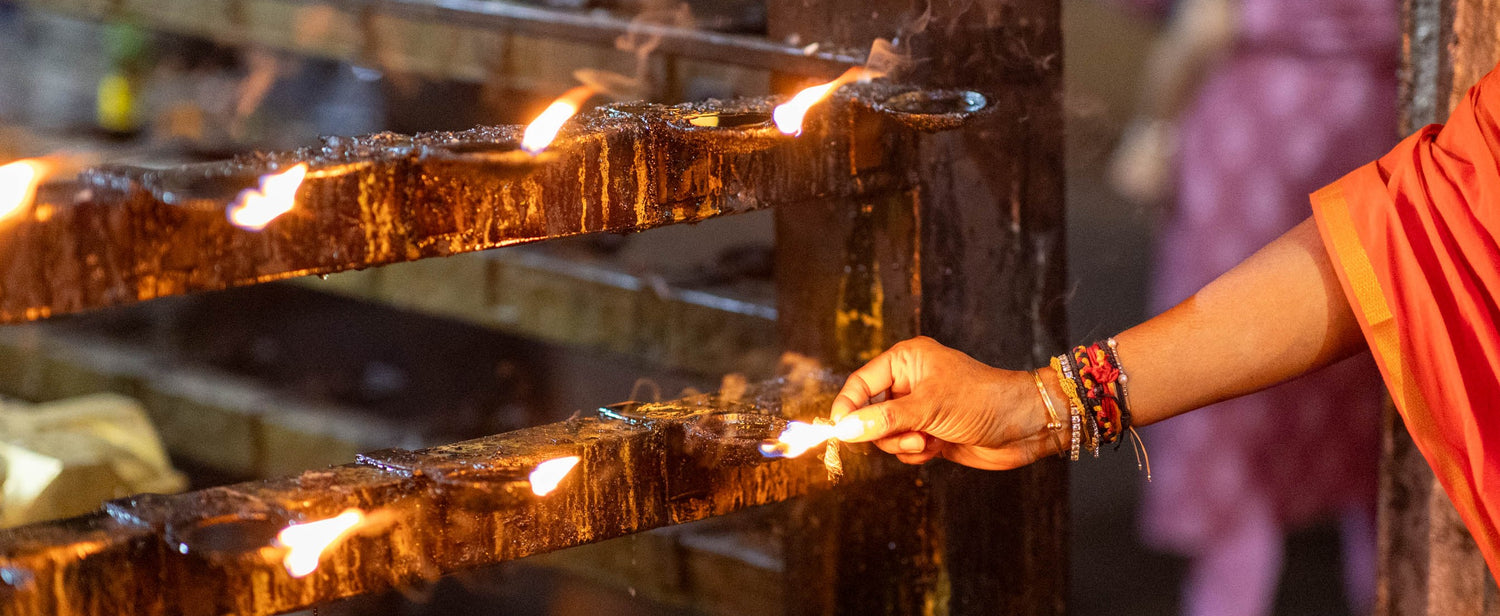

Before dawn, the roads of Maharashtra are already alive.
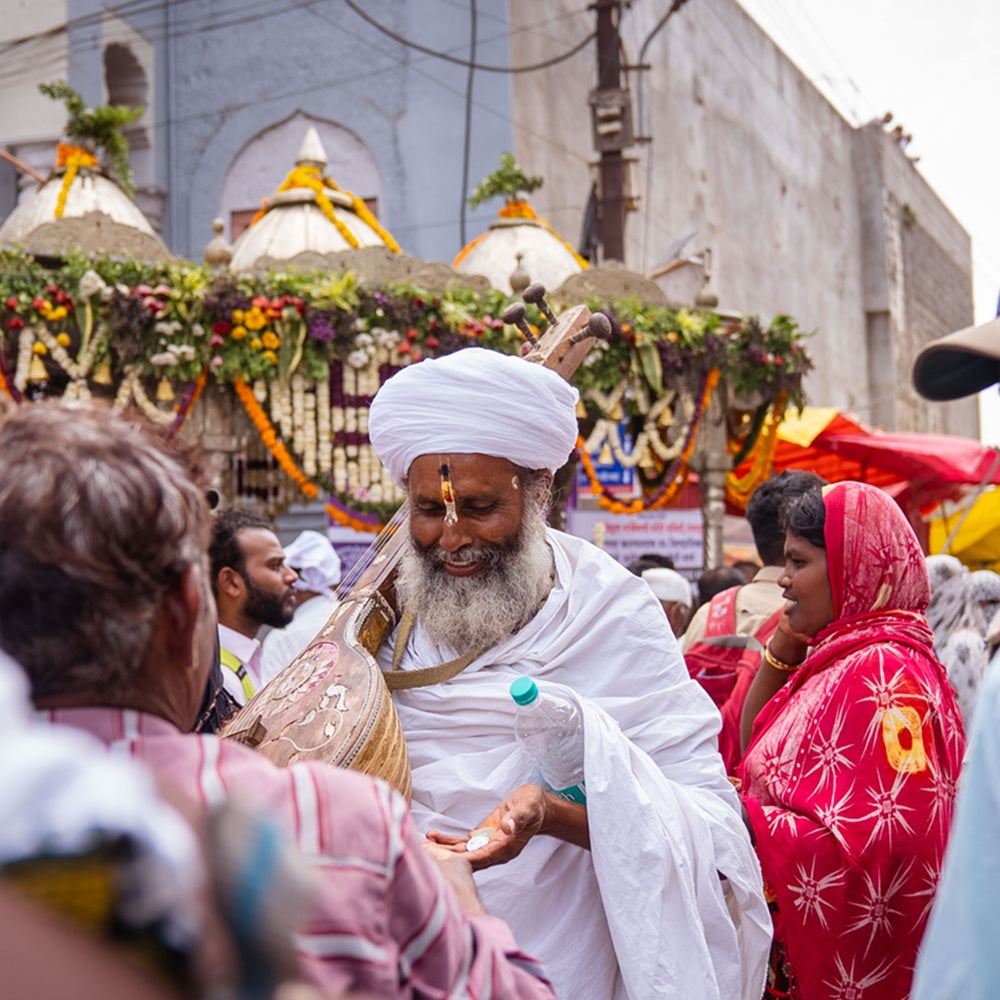
The sound comes first: the steady rhythm of cymbals, the beat of the mridanga, and thousands of voices singing, "Jai Jai Ram Krishna Hari." Saffron flags sway above an endless sea of white clothing. Around every neck hangs a tulsi mala. Some are young, some are elderly. Farmers walk beside doctors, children beside saints, all moving with one purpose.

They are Varkaris. And for the next three weeks, every step they take is towards one destination: the waiting Lord of Pandharpur.

Every year, just before the monsoon reaches Maharashtra, this extraordinary river begins to flow across the state. It is not made of water, but of people. Carrying the padukas of the great saints, they transform highways and village roads into one of the world's largest living expressions of devotional love. This sacred journey is known simply as the Vari.

Why is it Called the "Vari"?
To an outsider, it looks like a standard pilgrimage. But to understand the soul of this tradition, you have to look at the word itself.
In Marathi, Vari doesn't simply mean "pilgrimage." It comes from the idea of a regular return— a repeated journey made out of love, year after year. A Varkari is literally "one who performs the Vari." They don't walk to Pandharpur once to tick a box; they return every single year because it is a spiritual homecoming. It is the physical manifestation of the soul’s perpetual longing to return to its Divine Source.

A Journey Carried by the Saints
The modern Vari is a highly organized spiritual ecosystem built on the footprints of Maharashtra's greatest saints. While the pilgrimage is ancient, the structured palkhi (palanquin) procession we see today evolved over centuries:
· The Palkhi Tradition: Carrying the padukas (sacred sandals) of the saints in elaborate palanquin processions actually began in 1685 with Sant Tukaram's son, Narayan Maharaj.
· The Modern Structure: In the early 19th century, a retired courtier named Haibatbaba Arphalkar formalised the Vari into the disciplined, beautiful procession we know today, organizing pilgrims into structured groups called dindis—self-contained traveling spiritual communities where musicians, flag-bearers, and helpers ensure that no one walks alone, moving as one collective body towards Bhagavan.

For the Varkaris, the saints aren't historical figures—they are living company. Through abhangas (devotional poems) written by saints like Dnyaneshwar, Tukaram, Janabai, and Chokhamela, the saints literally walk beside the pilgrims. Singing these 700-year-old songs gives the devotees strength when their bodies grow tired. By walking behind the padukas, the message is simple: follow the footsteps of the saints, and they will take you to the Lord.

The Radical Equality of the Road
One of the most remarkable aspects of the Varkari movement is its social reality. Long before modern equality movements, the Vari acted as a radical social revolution.
On the road to Pandharpur, worldly labels completely lose their importance. Rich and poor, young and old, educated and uneducated, men and women—all walk together as equal servants of Vitthala. The saints themselves came from every background imaginable: potters, tailors, gardeners, barbers, and those considered "untouchable."
The road teaches ultimate humility. No matter who you are, you still have to walk, and you still need grace. Devotees routinely bow and touch the feet of fellow travelers, recognizing the spark of Vitthala in everyone they meet.

The Longing for Darshan
When this massive collective body finally reaches the Chandrabhaga River in Pandharpur for Ashadhi Ekadashi, the energy is electric. The climax of this multi-week journey isn't measured by personal comfort, but by the intense focus on a single moment of absolute connection. As Paramahamsa Vishwananda beautifully shares:
"Varkaris reach Pandharpur after a long journey and wait for hours, even days, to see their beloved Vitthala for just a second. Many don’t even enter the Mandir, they just take Darshan of the Kalash of the Mandir from far away, take some water from the sacred Chandrabhaga river, and leave. After weeks of walking, their faith in Panduranga’s constant presence and Prem goes back with them, stronger than ever."
They know that darshan isn't measured by time or physical proximity—it is measured by love. One second of looking at the temple spire (Kalash Darshan) from afar with a heart completely purified by weeks of walking is enough to change a lifetime.

From the Outer Vari to the Inner Vari
The Varkaris remind us that devotion is not measured by how far we travel, but by how deeply we allow ourselves to be transformed. The physical journey to Pandharpur reaches its destination, but it opens the door to something much deeper within.
Ashadhi Ekadashi is also known as Dev Shayani Ekadashi, marking a profound planetary and spiritual shift. As Paramahamsa Vishwananda explains:
"Dev Shayani means the day that Bhagavan goes into deep Yog Nidra for 4 months. It is a time of intense spiritual reflection and reform. One must give one’s utmost to the spiritual path. There is no other way. For Bhagavan to wake up completely in your heart, where there is no separation left between the atma and Paramatma, you have to work with every ounce of energy you have. For most people, this seems like a very difficult or undesirable thing, to work so hard and constantly. But for a true Guru bhakta, this is an enormous joy."
For a disciple on the path of Bhakti Marga, the Vari is a perfect mirror of the Guru-disciple relationship. Just as the Varkaris follow the padukas of the saints, the disciple follows the Lotus Feet of the Satguru, trusting that He leads every sincere heart home.
Every day, we are all walking somewhere. The true spirit of the Vari is to make sure that with every step, every action, and every breath, we are walking towards Vitthala.

Jai Jai Ram Krishna Hari!
Jai Vitthala Panduranga!
Jai Gurudev!

Leave a comment
This site is protected by hCaptcha and the hCaptcha Privacy Policy and Terms of Service apply.