

Atithi Devo Bhava - Guest is God
What pilgrimage has taught me about hospitality, dharma, and recognizing the sacred in another person
- Radhadulari Dasi

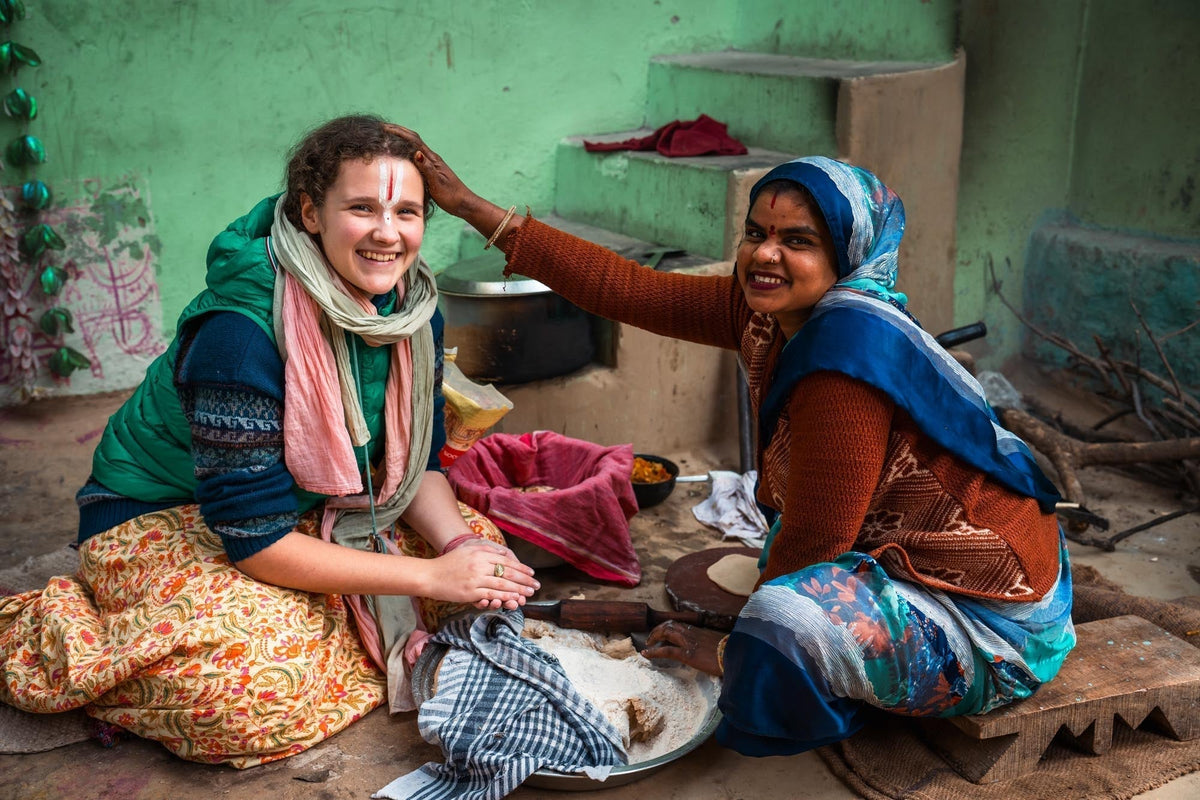
One of the things I have noticed after years of travelling on pilgrimage in India is how quickly a stranger can be absorbed into someone else’s care. You arrive at a home, an ashram, a temple office, sometimes somewhere nobody was expecting you, and before anything else happens there is water in front of you. Very often food follows. You can insist that you have already eaten, sometimes more than once, and it makes remarkably little difference.
At first I understood this mostly as Indian hospitality. And of course, on one level, it is. There is a cultural instinct here that many of us who did not grow up in India immediately notice: a guest should not leave thirsty, hungry, or uncared for. But the more time I have spent travelling to sacred places, especially with people who are clearly there for spiritual reasons, the less adequate the word “hospitality” has begun to feel.
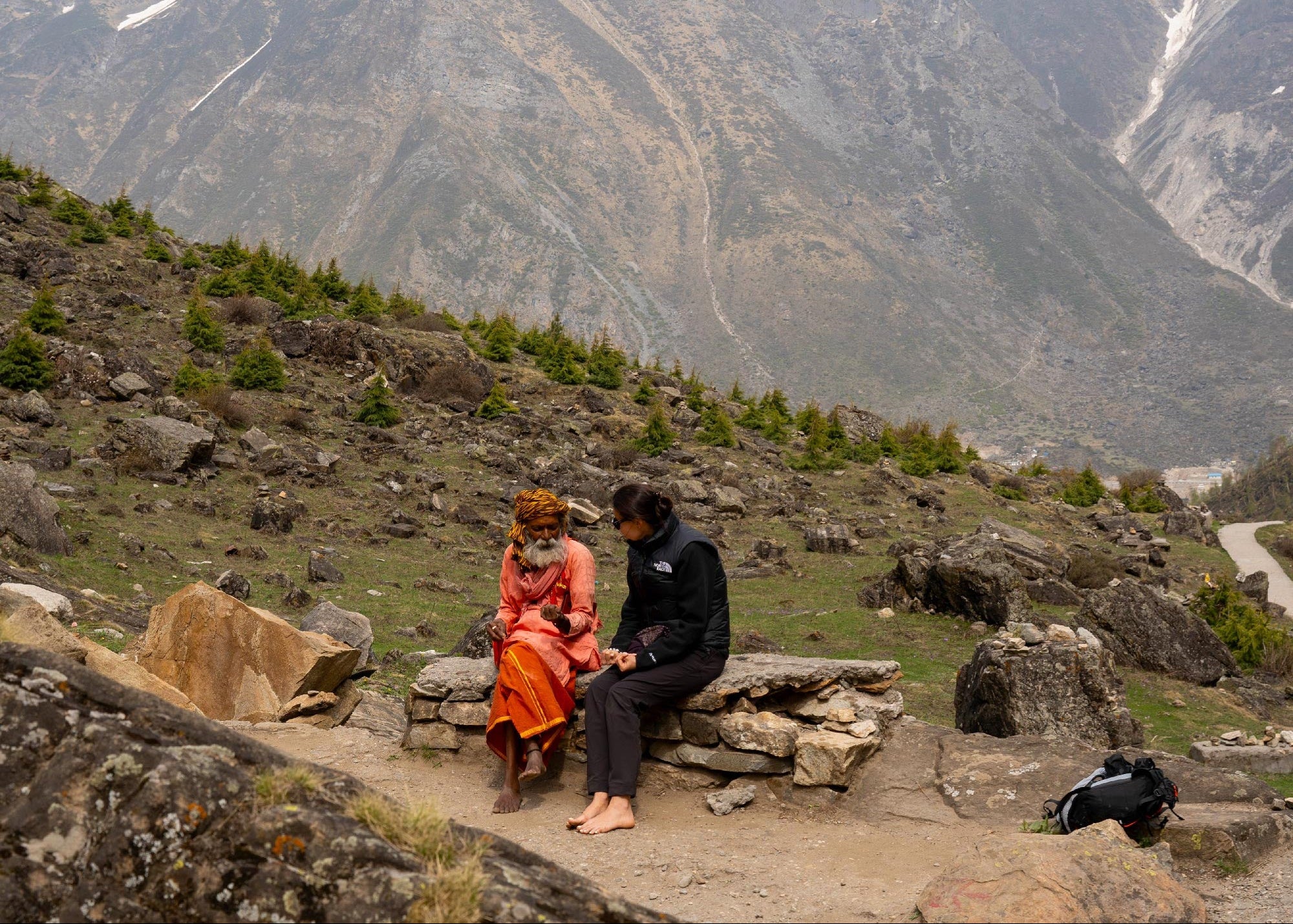
Some of the most memorable moments on pilgrimage have had almost nothing to do with food. A family opens a room containing relics preserved for generations. Someone who met us five minutes earlier starts making phone calls so that we can enter a place normally closed to visitors. A saint gives us far more time than expected. A caretaker puts aside what he was doing and begins telling stories that are not written on any signboard and rarely told to tourists. Sometimes the people hosting us seem almost as surprised by their generosity as we are. They simply feel that they should help.
India has a phrase for the guest that is so familiar it is easy to hear without really hearing it: Atithi Devo Bhava — the guest is to be regarded as divine. In its scriptural context, though, it is much bigger than a rule about being a good host. It belongs to a discussion of dharma, spiritual education, giving, self-restraint, and the kind of consciousness sacred learning is supposed to produce. Hospitality is only the visible surface of the idea.

When spiritual education leaves the classroom
The phrase comes from the Taittirīya Upaniṣad, in a section that reads almost like a graduation address. The student has completed his Vedic education and is preparing to leave the teacher’s home. At that point the teacher does not send him away with more philosophy. He gives him instructions for living.
सत्यं वद । धर्मं चर ।
satyaṁ vada | dharmaṁ cara |
“Speak truth. Live according to dharma.”
Taittirīya Upaniṣad 1.11.1
The passage continues with reminders not to neglect truth, dharma, well-being, study, or teaching. Then comes the famous sequence:
मातृदेवो भव । पितृदेवो भव । आचार्यदेवो भव । अतिथिदेवो भव ।
mātṛdevo bhava | pitṛdevo bhava | ācāryadevo bhava | atithidevo bhava |
“Regard the mother as divine. Regard the father as divine. Regard the teacher as divine. Regard the guest as divine.”
Taittirīya Upaniṣad 1.11.2
I find the placement of the guest in that list more interesting every time I think about it. There is an obvious reason to revere one’s mother, father, and teacher. They have given us something fundamental: life, care, knowledge, formation. Gratitude already has somewhere to attach itself. The guest is different. The guest may be a person with whom we have no history at all.
That makes atithi-devo bhava more demanding than it first appears. It is relatively easy to be loving toward people we already love, or reverential toward people we already consider sacred. The stranger is another matter. They have not earned a position in our life; they may arrive at an inconvenient time or need something when we are tired or busy. The guest becomes a test of whether our spiritual values remain intact when there is no emotional attachment, social obligation, or obvious reward helping us along.
Traditional explanations of atithi often emphasize this element of unpredictability: the guest whose arrival is not fixed beforehand, the person who does not fit neatly into the host’s schedule. The older hospitality literature repeatedly imagines the guest as someone who arrives and must be received as they are. Generosity is easiest when we have planned to be generous; the unplanned person reveals how much room there actually is in us for another human being.
What is also striking is that the Taittirīya Upaniṣad does not stop at telling the student whom to honour. A few lines later it turns to the inner quality of giving itself:
श्रद्धया देयम् । अश्रद्धयाऽदेयम् । श्रिया देयम् । ह्रिया देयम् । भिया देयम् । संविदा देयम् ।
śraddhayā deyam | aśraddhayā adeyam | śriyā deyam | hriyā deyam | bhiyā deyam | saṁvidā deyam |
“Give with faith; do not give without faith. Give according to your means, with modesty, with reverence, and with understanding.”
Taittirīya Upaniṣad 1.11.3
This may be what prevents Atithi Devo Bhava from becoming sentimental. The point is not merely that something passes from my hands into yours; the consciousness with which it is given matters. Giving can look generous and still be full of ego, obligation, superiority, or performance. The Upaniṣad asks for something more refined: faith, modesty, reverence, understanding. Spiritual hospitality is measured not only by what the guest receives, but by what is happening inside the person who gives.

The stranger is where the teaching becomes real
This is one reason hospitality belongs naturally to dharma. Dharma is easiest to admire in theory; it becomes more revealing when another person places a claim on us that we did not arrange. We can be very devoted in a temple and still become irritated when somebody needs our time. We can speak beautifully about seeing God everywhere and still divide people instinctively into those who matter to us and those who do not.
The guest unsettles that hierarchy. If the guest is to be treated as deva, then sacredness is no longer limited to the forms in which I already expect to encounter it. The teaching asks whether reverence can survive when the sacred arrives without announcing itself — as someone tired, hungry, foreign, awkward, inconvenient, or simply unknown.
The Kaṭha Upaniṣad makes this principle almost startlingly concrete. Naciketas arrives at the house of Yama, the Lord of Death, while Yama is away. He waits there for three nights without food. When Yama returns, the household does not treat this merely as an unfortunate breach of etiquette. The unreceived guest is compared to fire entering the house.
वैश्वानरः प्रविशत्यतिथिर्ब्राह्मणो गृहान् । तस्यैतां शान्तिं कुर्वन्ति हर वैवस्वतोदकम् ॥
vaiśvānaraḥ praviśaty atithir brāhmaṇo gṛhān | tasyaitāṁ śāntiṁ kurvanti hara vaivasvatodakam ||
“Like fire, a guest enters the house. Bring water, O Vaivasvata, to make peace with him.”
Kaṭha Upaniṣad 1.1.7
The imagery is strong because fire is never neutral. It can warm, illuminate, purify, or burn, depending on how it is approached. A guest, too, creates a spiritual situation. Something has entered the household and a response is now required.
Because Naciketas has waited for three nights, Yama gives him three boons. Those boons open into one of the great conversations of the Upaniṣads, as Naciketas presses Yama on death and the nature of the Self. There is an irony here that I love: the “guest” first appears as a young boy inconveniently left waiting at someone’s door, yet the encounter becomes the setting for one of the deepest teachings in Indian philosophy.
Of course, we should not romanticize every stranger or pretend that every meeting has some dramatic hidden destiny. But the story does challenge the speed with which we think we know what another person represents. We usually decide very quickly which meetings are important. Pilgrimage has repeatedly shown me that some of the most significant encounters are the ones nobody planned.

Hospitality as yajña
The Āpastamba Dharmasūtra pushes the idea even further. In its discussion of the duties of a householder, it describes receiving a guest as an ongoing sacrifice offered to Prajāpati:
“This reception of guests is an everlasting sacrifice offered by the householder to Prajāpati.”
Āpastamba Dharmasūtra 2.3.7.1 (Bühler translation)
The text then develops the comparison in almost surprising detail. The fire in the guest’s stomach corresponds to the sacrificial fire. Feeding the guest becomes an offering. Rising when the guest departs becomes part of the concluding rite. A kind word is compared to the dakṣiṇā offered in sacrifice. Following the departing guest is compared with the steps of Viṣṇu.
“When he addresses the guest kindly, that kind address represents the dakṣiṇā. When he follows his departing guest, his steps represent the steps of Viṣṇu.”
Āpastamba Dharmasūtra 2.3.7.8–9
This gives hospitality a completely different logic. If receiving someone is yajña, I am not simply the person who possesses something and chooses to give some of it away. I have been given an occasion to make an offering. The person who arrives is not merely the beneficiary of my virtue; their presence creates the possibility for that virtue to exist at all.
This helps explain something I have seen again and again in ashrams and saints’ homes. We arrive feeling deeply grateful for what somebody gives us, and yet the host often expresses an equally sincere gratitude that we came. At first this can seem almost backwards. They fed us, gave us their time, opened their doors, shared things that were precious to them — why are they thanking us? But within the logic of yajña it makes sense. The opportunity to serve is itself received as grace.
The host and guest are not performing identical roles: one gives and one receives in a particular moment. But spiritually, the exchange is not one-directional. The host receives an opportunity for seva, generosity, humility, and participation in another person’s journey; the guest receives care, knowledge, shelter, access, encouragement, or whatever happens to be given. Both can leave the encounter with more than they entered it with.

The Divine may be working through the meeting
That reciprocity is also what has changed the way I hear the phrase “the guest is God.” I used to understand it mainly as an instruction directed toward the host: see something sacred in the person who has come to you. I still think that is central, but pilgrimage has made me wonder whether the teaching is even more relational than that.
Perhaps the Divine is not only present on one side of the encounter. The guest is moved to seek and travel; the host is moved to receive and give. One person arrives with a question, longing, or intention, and another happens to hold a piece of what they need. Neither may have arranged the meeting, and sometimes neither fully understands why it became important.
In those moments the host can become an instrument of grace for the guest, but the guest also becomes an instrument for the host. The seeker gives another person the opportunity to serve, to share, to remember what is precious to them, and sometimes to experience their own tradition again through the eyes of somebody encountering it with sincerity.
This is not a mystical claim about every cup of chai offered to a visitor. It is simply an observation that some human meetings carry more than the obvious exchange on the surface. Anyone who has travelled deeply through sacred places has probably felt it: you came for a temple or a saint, but what opened the place for you was a person.
And perhaps this is where Atithi Devo Bhava becomes a serious spiritual teaching rather than a charming cultural phrase. It asks whether spiritual life has trained us to recognize sacred possibility beyond the forms in which we usually look for it. Temples make reverence easy because everything around us announces that we are standing somewhere sacred. A human being usually does not.
The harder practice is to carry that reverence with us when we leave the temple — to become less certain that we know which person matters, which interruption is meaningless, which meeting has nothing to teach us, and where the Divine is or is not at work.
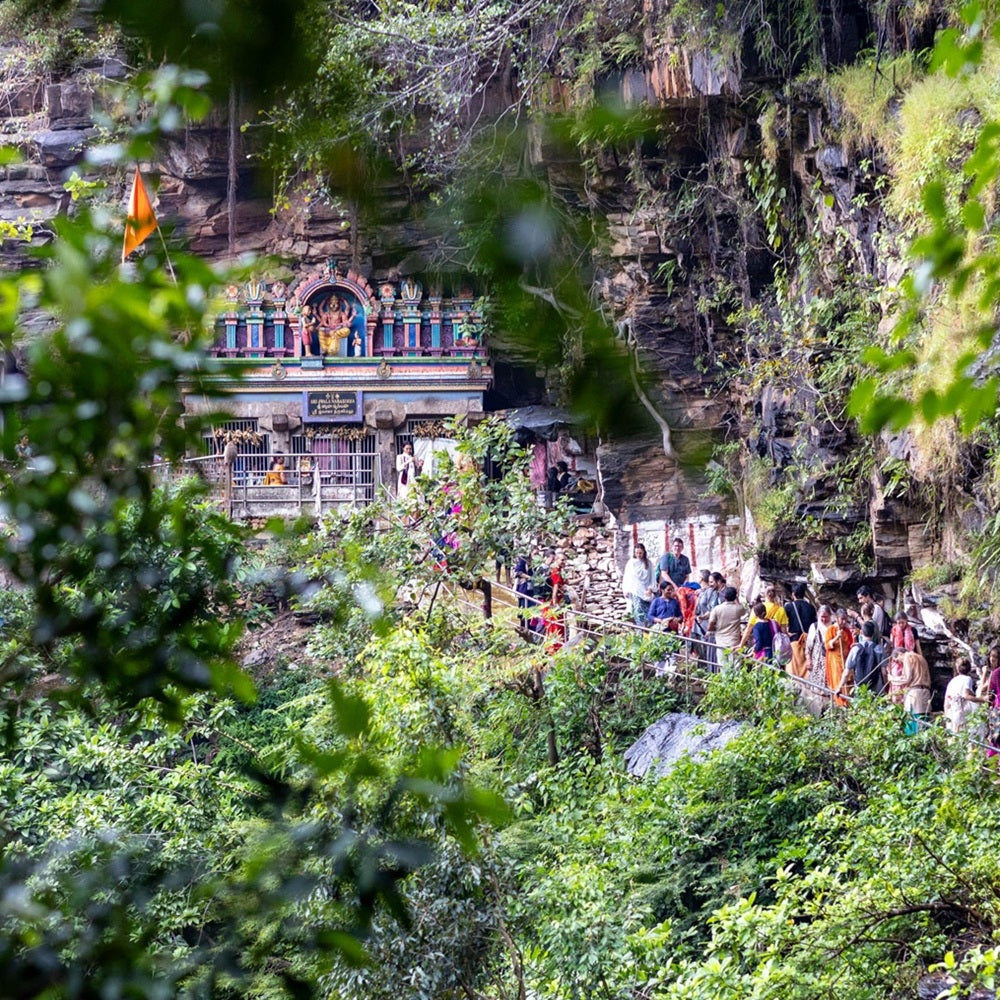
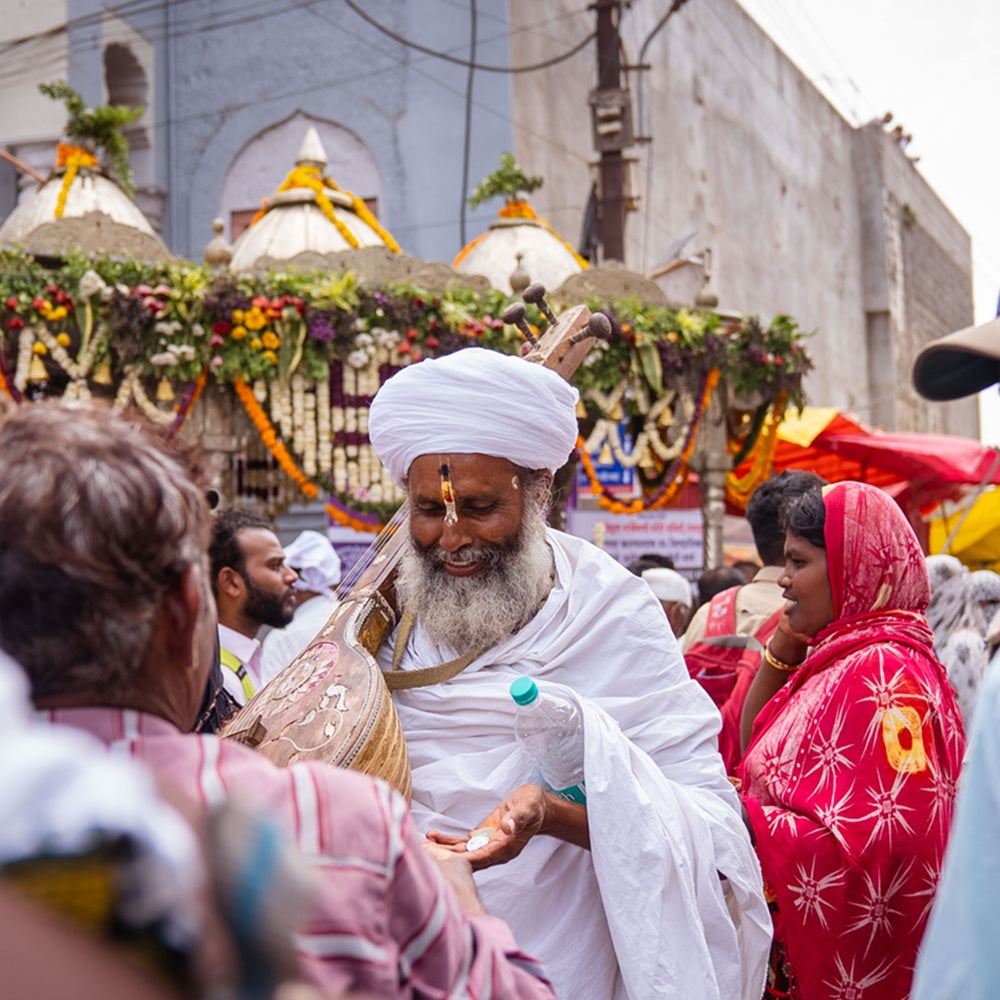
On pilgrimage we spend a great deal of time travelling toward holy places. We cross cities, mountains, forests, and sometimes whole countries because we believe that certain places can bring us closer to something sacred. Yet again and again, the sacred life of those places reaches us through people: through the person who opens the door, pours the water, tells the story, makes the introduction, or simply recognizes that we have come looking for something real.
Maybe that is what the scriptures are training us to notice. Spirituality is not only the ability to recognize God where God is already labelled for us. It is the gradual development of a consciousness capable of reverence when the sacred arrives in ordinary human form — hungry, tired, unplanned, and standing at the door.



Leave a comment
This site is protected by hCaptcha and the hCaptcha Privacy Policy and Terms of Service apply.