
Badrinath
The town is located high in the mountains. Only one village, Mana Village, is slightly higher. The famous pilgrimage site and the stunning high-altitude valley are situated between the Nara and Narayana Parvat mountains.

Another name for Badrinath is Narada Kshetram, because Rishi Narada achieved Moksha (Liberation) here. Brahma himself installed the deity of Badri Narayana in the temple of
Badrinath.
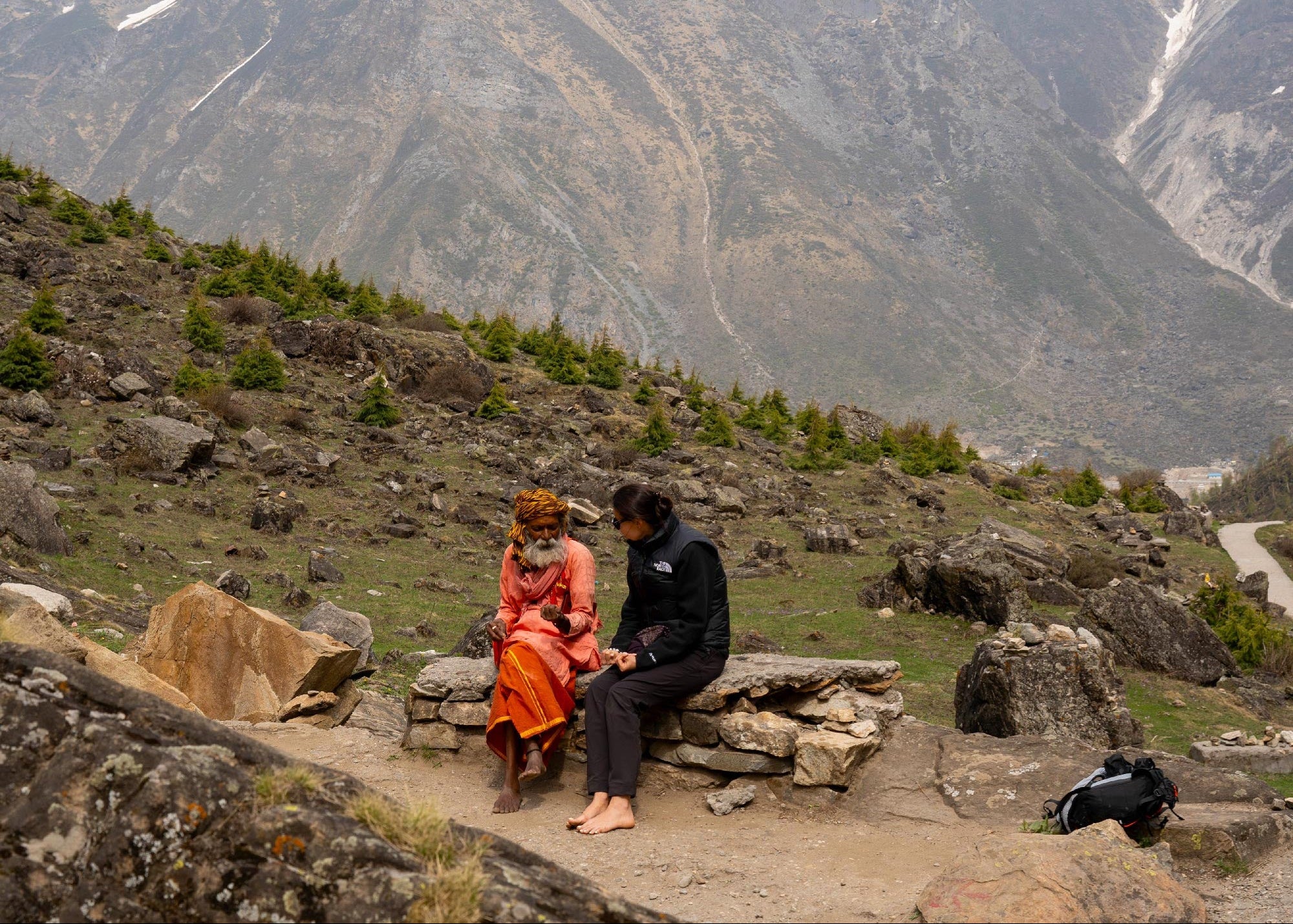
At least once in their lives, Vaishnavas and yogis of all denominations try to get to Badrinath. Saints reside and meditate here. Here, you can meet yogis who are not affected by the cold, meditating naked in the snow, sustaining their bodies with just prana and water.

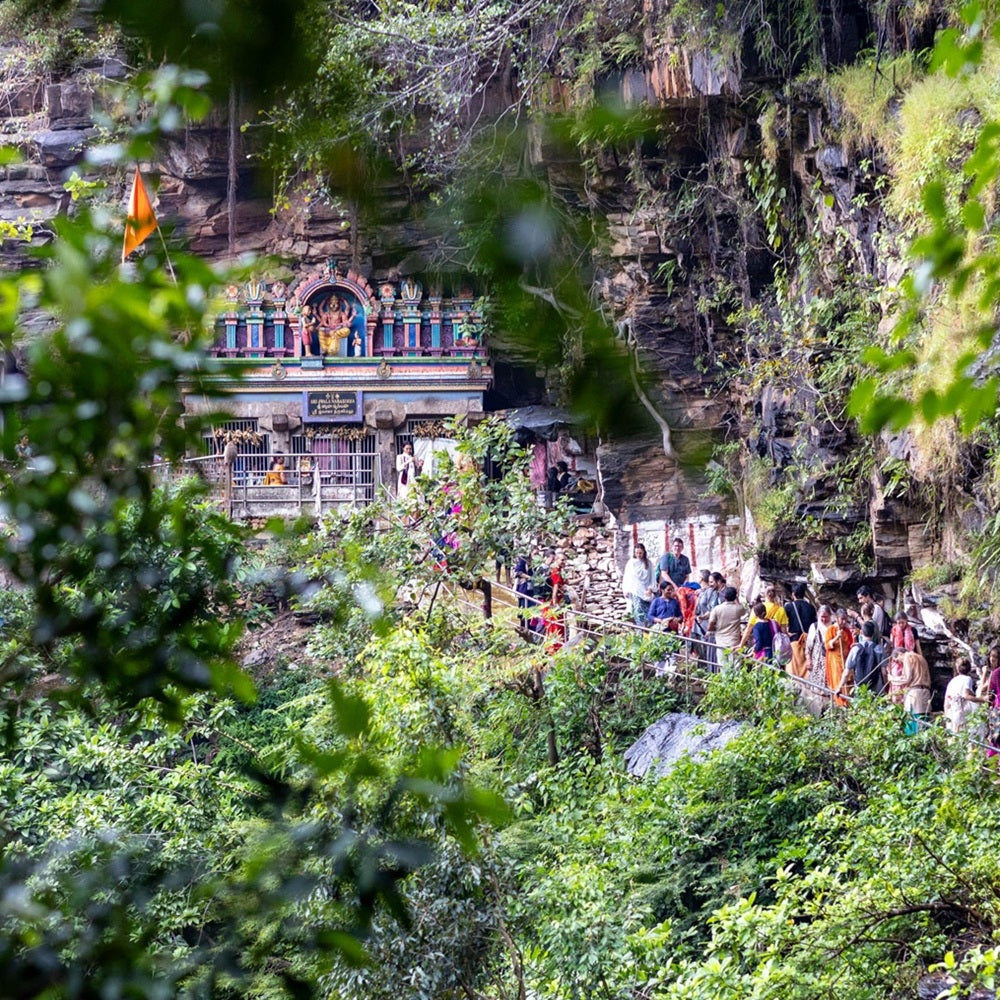
The Vasundhara Waterfalls and the cave where the Mahabharata and the Srimad Bhagavatam were written by Vedavyasa are also situated in the Badrinath area. It was here that the Pandavas came to journey further into the mountains to the Satopanth Lake after Sri Krishna left the Earth.

Lord Brahma himself enshrined the deity of Badri Narayana in this town. The Skanda Purana says, ‘There are many sacred places in Heaven, on Earth, and in Hell; but none of them can compare with Badrinath.’ There are several legends explaining the extraordinary sanctity of Badrinath (see descriptions of Vishnu-padam and the Badrinath Vishal Temple below).
Vishnu-padam

This is the sacred place where Narayana set His Foot upon the Earth, and on a huge stone, one can clearly see His Footprint. Vishnu-padam is situated between the two Himalayan mountains, Nara and Narayana. For a million years, a great battle and deep meditation took place here simultaneously, serving as harbingers of Krishna's descent to Earth and His wondrous lila.
‘Shreemad Bhagavad Gita. The Song of Love’,
Commentary on Verse 5, Chapter 4,
Paramahamsa Vishwananda
Nara and Narayana were manifestations of Lord Nrsingadev. At that time, when Lord Nrsingadev manifested Himself, He killed the demon Hiranyakashipu. Once He had killed the demon Hiranyakashipu, it was the end of that incarnation of Lord Narayana.
However, also at that time, there was another demon, by the name of Sahasrakavacha. He had done great penance to Surya Narayana, the Sun-god. As the story goes, all the demons asked for immortality. But someone who is darkened in the mind can’t attain immortality. Only when one is free like Arjuna, will one attain immortality. This demon asked, ‘Give me the boon of immortality.’ But he knew that whoever had asked for this boon, had not gotten it. Even his last friend, Hiranyakashipu, had been killed by Lord Nrsingadev.
So, he thought, ‘Okay. I can do better than Hiranyakashipu. I will ask for the blessing that I will have a thousand kavachas, a thousand armours on me. And who ever tries to kill me and break one of these kavachas, will die. Furthermore, to be able to break one of these armours, one has to fight with me for a thousand years and do a thousand years of penance.’
Of course, the Lord knew about this. So the two sages, Narayana and Nara, were manifested from the head and body of Lord Nrsingadev, respectively. Narayana is the Supreme Lord Hinself and Nara represents mankind. When the time came for them to kill the demon, Sahasrakavacha, Nara tried to kill him, but was defeated and died. Narayana, through His yogic power, brought Nara back to life. He said, ‘How will we kill him? It seems impossible. Whoever tries to kill him will die. Due to the blessing that Surya Narayana gave him.’
So they alternated with each other. One would fight to break one kavacha for one thousand years, then would go into a deep meditation. For a thousand years.Then, for the next thousand years, they did it the other way around: one time it would be Nara fighting the demon, and the other time it would be Narayana. This continued for a million
years. Finally, there was only one kavacha, one armour left. When Sahasrakavacha saw that he was going to die, he appealed to Surya Narayana. He asked the Sun-god, ‘Please protect me!’ At that time the great deluge, the pralaya, came and he ran away to hide. Lord Narayana ended that incarnation and said, ‘We will come back again to finish this!’ Then later on, Sahasrakavacha was born as Karna, Nara was born as Arjuna, and Narayana was manifested as Krishna.’

Badri Vishal Temple

Panch Badri in Uttarakhand is a group of temples dedicated to Lord Vishnu, situated in the Badri Kshetra region, which extends from Satopanth Lake, approximately 24 km above Badrinath, to Nandprayag in the south. This region is home to five temples: Vishal Badri (Badrinath), Yogadhyan Badri (Meditating Narayana), Bhavishya Badri (Future Badri Vishal), Vridha Badri (Narayana appearing in the form of an elderly sage, Narada), and Adi Badri (the Original Badri). Each temple holds its own unique significance, yet together they form a unified whole for the devotee worshipping Sriman Narayana. The principal among the five is the Badri Vishal temple.
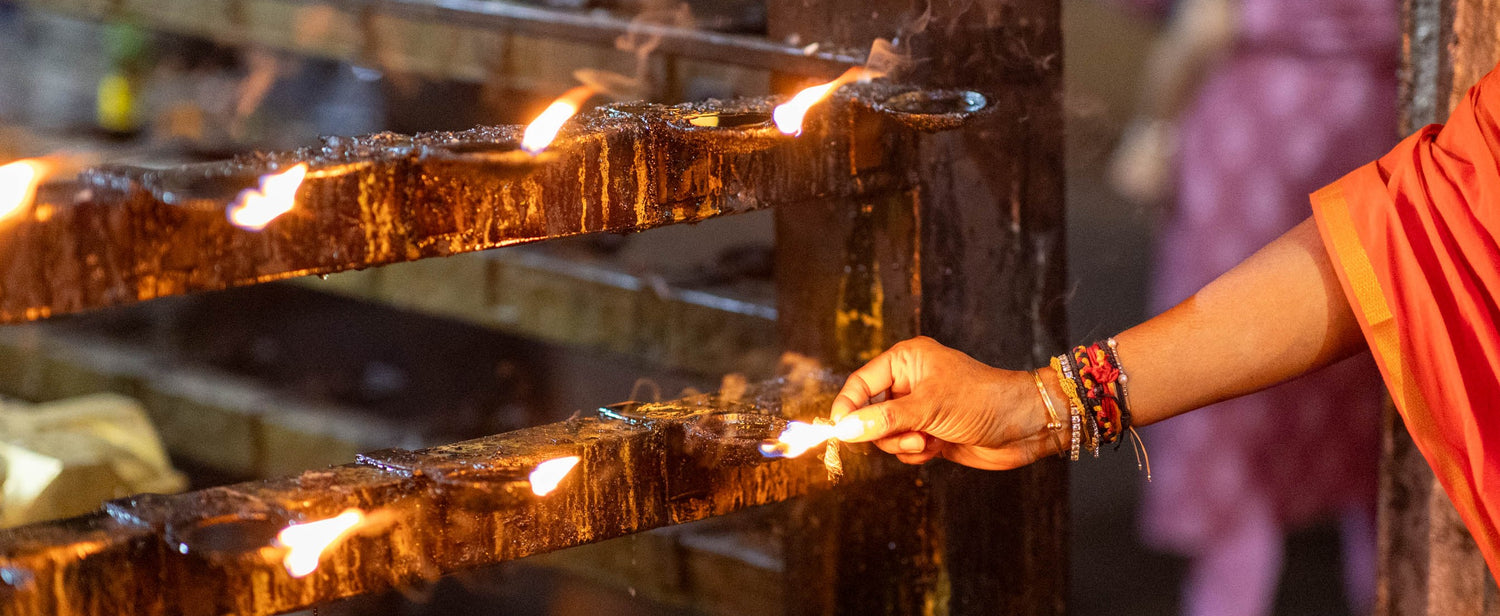
The sacred springs of Tapta-kunda and Narada-kunda, in which many pilgrims bathe, are situated near this temple. In winter, the temple is closed due to severe weather conditions. When the brahmanas close the temple at the beginning of winter, they leave a burning oil wick on the altar. Returning in the spring, they find the oil wick burning, surrounded by fresh flowers and sandalwood paste, indicating that the temple service continued unabated during the winter – by the heavenly inhabitants themselves.
There are 15 deities in the temple of Badri Narayana. The main deity of Maha Vishnu is swayambhu (self-manifested). This is the only temple on Earth that Sri Vishnu sits in a meditative pose, just as He did many eons ago when He first meditated here.
There are several legends explaining why Sri Vishnu is depicted sitting, and not reclining in this temple. According to one of them, a holy sage once scolded Sri Vishnu after seeing His wife Sri Lakshmi massaging His Feet. After that, Sri Vishnu retired to Badrinath, where He performed austerities for a long time, sitting in a meditative pose. In order to protect Her husband from rain and sun, Sri Lakshmi took the form of a Badri tree, and covered Him with Her crown. Pleased with this act, the Lord said that from now on this place will bear Her Name.
According to another legend, Shiva and Parvati performed Tapasya in Badrinath. One day, Lord Vishnu appeared before them in the form of a crying boy. When Parvati asked Him why He was crying, the boy replied that He would very much like to meditate in Badrinath. Lord Shiva and Parvati, guessing that it was Narayana Himself, left Badrinath and continued to meditate in Kedarnath. Since then, Lord Shiva has been living in Kedarnath and Sri Narayana in Badrinath.



Leave a comment
This site is protected by hCaptcha and the hCaptcha Privacy Policy and Terms of Service apply.